Bronchopulmonary Segments
In addition to a segmental bronchus, each bronchopulmonary segment is also supplied by its own branch of the pulmonary artery.
Bronchopulmonary segments are anatomically distinct units covered by connective tissue septa and can be surgically resected without impacting neighbouring segments.
The right lung is typically divided into 10 bronchopulmonary segments, while the left lung is divided into 8–10 segments.
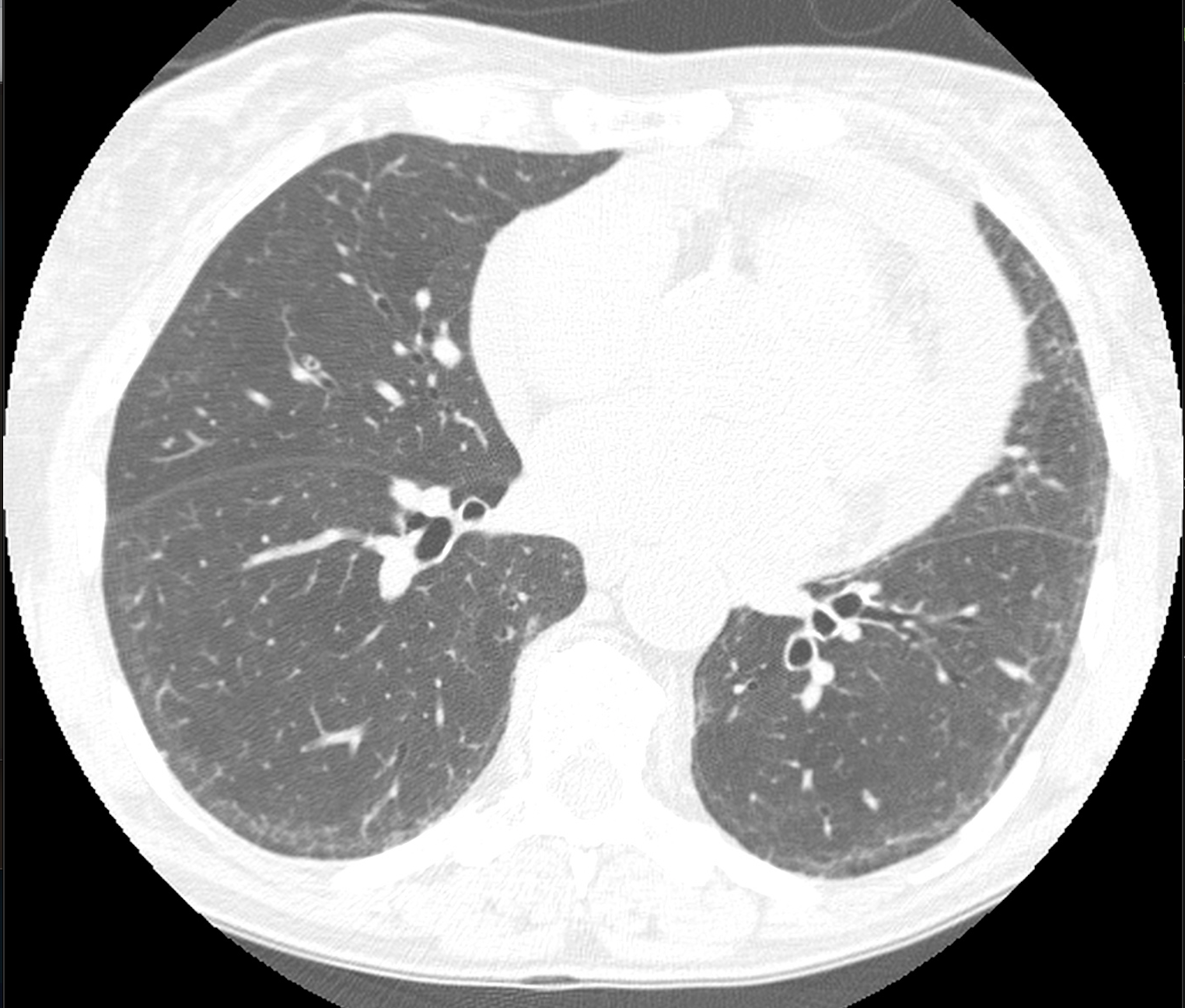
Click "Show Labels" to view the position of some of these segments in an axial cross-section. Note that not all bronchopulmonary segments are shown.
There are multiple naming systems you may encounter for bronchopulmonary segments. The image to the right uses the Jackson–Huber Nomenclature which was proposed by Chevalier Jackson and John Franklin Huber in the 1940s. This classification system names the individual lung segments based on their spatial orientation, forming the basis of modern segmental nomenclature.
References
Boyden, E. A. (1961). The Nomenclature of the Bronchopulmonary Segments and Their Blood Supply. Diseases of the Chest, 39(1), 1–6. https://doi.org/10.1378/chest.39.1.1
Ugalde, P., Camargo, J.deJ., & Deslauriers, J. (2007). Lobes, fissures, and bronchopulmonary segments. Thoracic surgery clinics, 17(4), 587–599. https://doi.org/10.1016/j.thorsurg.2006.12.008
Mueller-Mang, C., Ringl, H., & Herold, C. (2017). Interstitial Lung Diseases. Multislice CT, 261–288. https://doi.org/10.1007/174_2017_151